|
William Neilly... 'glesca artist' |
|
 3/12/47 - 25/2/21 | .'glesca
artist' paintings, page 3 (see more examples of his paintings on pages 1-2,4-5) for further examples of paintings by 'glesca artist' goto GlescaPals messageboard -------------------------------------------------------------------------------------------------------------------------------------  Purchase his book: "Glimpses of Times Past"Purchase his book: "520 Gallowgate: Family Life in Glasgow's East End" Purchase his book: "Glimpses of Times Past"Purchase his book: "520 Gallowgate: Family Life in Glasgow's East End" |
 |
|
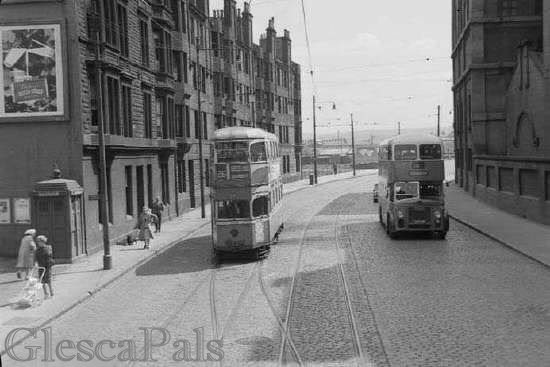
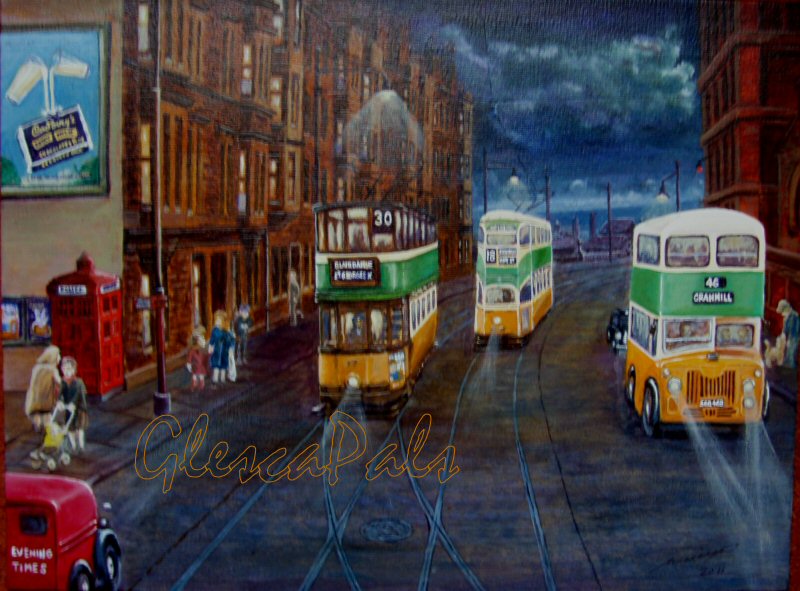
This
nostalgic view of Dalmarnock Road is typical of the area around the
late 1950's. Looking south towards Rutherglen, Dalmarnock Bridge
is shown in the background with factories in Downiebrae Road on the
south bank of the River Clyde. Dalmarnock Electric Power Station
is on the right of the number 46 Corporation motor bus from Castlemilk
en route to Cranhill via Bridgeton Cross. It is followed by a
taxi cab. The number 18 Coronation tramcar from Burnside is
en route to Springburn in the north of the city via Hope Street.
The number 30 standard hex dash tramcar is about to use the crossover
at its terminus at Birkwood Street, located immediately to the left of
the Evening Times delivery van. The tramcar will then
head to Blairdardie via Parkhead Cross. The red sandstone tenements on the left, comprising numbers 799, 805, 811 and 817 survived bombing of the Electric Power Station during World War II, and are all that remains today, apart from of course Dalmarnock Bridge. The painting, based on the above black and white photograph, uses acrylic on canvas board
measuring 406 x 305 mm (16" x 12") and it is protected with two coats
of gloss varnish. I
'Dalmarnock
Road Crossover at Birkwood Street't was signed and dated by me in February 2011. |
|
|
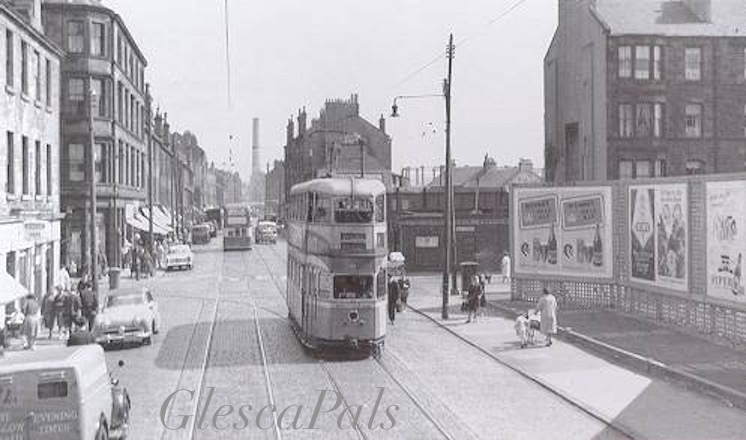 |
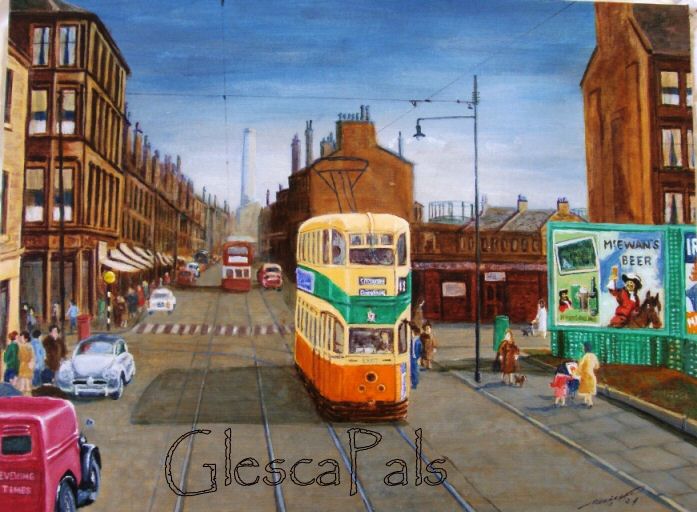
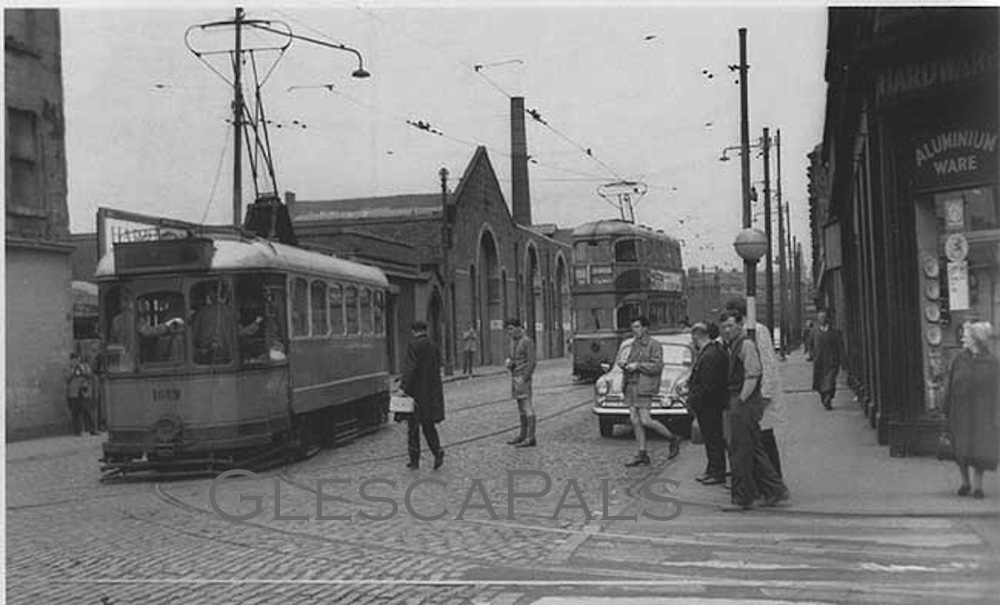
| Looking south along Dalmarnock Road, Dale Street is
on the right and, on the left immediately before the zebra crossing, is
Ruby Street where the tramcar depot is located. The number 18
Coronation tram is en route to Springburn via Glasgow
Cross. The number 63 red SMT motor bus heading south is en
route to Eddlewood, in Hamilton, via Cambuslang. The tank holders at the gas works located between Old Dalmarnock Road and Poplin Street can be seen to the far right of the red bus. The tall concrete chimney of Dalmarnock Electric Power Station is visible in the background. I painted
this using the shown black and white photograph as reference.
'Dalmarnock Road at Dale Street/ Ruby Street 1962'The painting using acrylic on canvas board measures 406 x 305 mm (16"x 12") It is protected with two coats of gloss varnish. It was signed and dated by me in February 2009. |
 |
 |
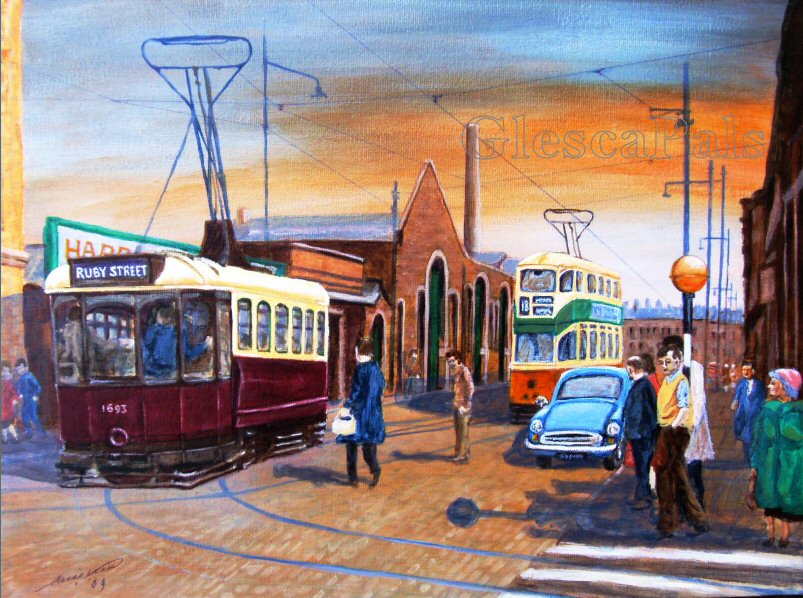
| Ruby Street Tram Depot c1962 |
|
My
painting Ruby Street Tram Depot used as reference the black and white
photograph taken in June 1962 at the time of the last tram
procession. It is late afternoon on a sunny summer’s
day and pedestrians are intrigued by the sight of a strange single deck
tram making its way into the tram depot to the left of the the
coronation tram. The trams having entered Ruby Street from
Dalmarnock Road. The single deck tram, nicknamed by
shipyard workers as “Wee Baldy” - because there was nothing on top and
“Baillie Burt’s car” - after the Corporation’s Tramways Convener who
introduced it on an experimental basis to compete with bus operators by
offering a fast, comfortable ride on longer inter-urban services.
The experiment however proved operationally unsuccessful.
The acrylic painting, on canvas board measuring 406 x 305 mm (approx. 16” x 12”)Opposite the tram depot was the 'steamie' (public wash-house) flanked either side by red sandstone tenements. 'Cran's' hardware shop is on the corner at the 'zebra crossing'. was signed and dated by me in February 2009. |
 |
|
|
|
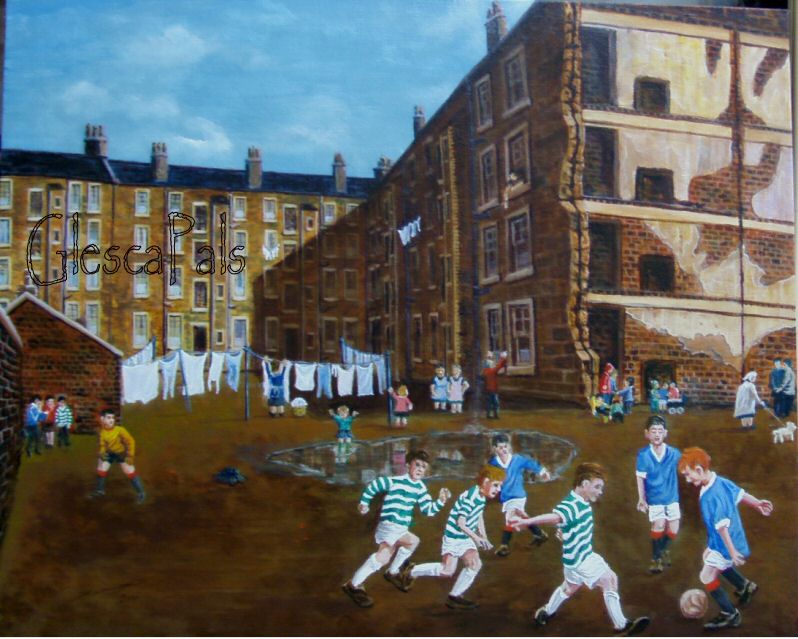
This
is a nostalgic painting of weans playing in the backcourts of Glesca
tenements during redevelopment of the area in the late 1950's and the
early 1960's. The weans,
kitted oot in their Rangers and Celtic fitba' strips play in the
backcourt of typical Glesca tenement houses that are in the process of
being demolished due to redevelopment of the area. The
"young firm" are being watched and encouraged from the sidelines by
other weans standing behind the goalie. One wummin is hangin' oot
her washin' having just taken her turn in the backcourt wash house. Two
wee lassies splash aboot in a puddle created by waste watter fae a
leakin' drain pipe and swing aroon a claethes pole. Two auld
wifies are having a blether and hoping that the dirty fitba' disnae hit
their clean washin'. A bawheid is aboot tae catch a piece
being thrown doon tae him fae the wummin hingin' oot the third storey
windae. He reassures his Ma that her ither weans are happily
playing roon the side o' the hoose where the remains o' fireplaces an'
cooker recesses can be seen on the plaster flaking gable end. A
wummin takes her dug fur a walk while two ither neeburs natter aboot
therr burroo money. The painting is an original composition using acrylic on canvas board
measuring 508 x 406 mm (20" x 16") and it is protected with two coats of gloss varnish. It was signed and dated by me in February 2011. |
| (see more examples of his paintings on pages 1-2,4-5) for further examples of paintings by 'glesca artist' goto GlescaPals messageboard --------------------------------------------------------------------------------------------------------------------------------------------------- The Author's books
.
|
.
|
